Textile Testing Equipment: Types, Applications & Importance
The textile industry depends on consistent quality, durability, strength, colour performance and safety. From raw fibres and yarns to finished fabrics and garments, every stage of production requires proper quality evaluation. Textile testing equipment plays an important role in measuring the physical and performance characteristics of textile materials and helping manufacturers maintain consistent product quality.
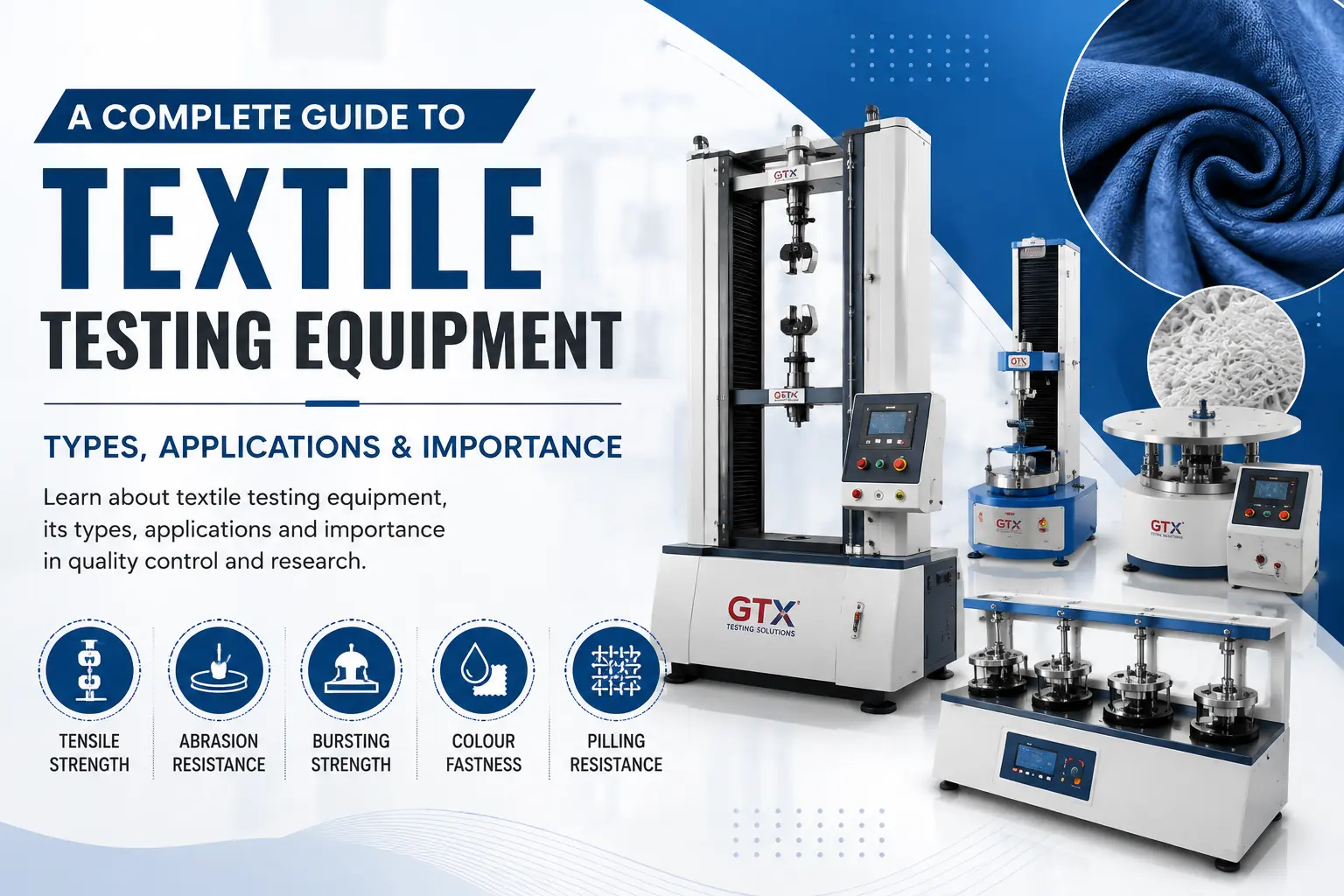
Modern textile laboratories use different testing machines to evaluate properties such as tensile strength, abrasion resistance, bursting strength, tearing strength, colour fastness, pilling and other performance characteristics. The right testing equipment helps manufacturers, testing laboratories, research institutions and quality control departments make reliable decisions about their materials and products.
What Is Textile Testing Equipment?
Textile testing equipment refers to laboratory machines and instruments used to evaluate the physical, mechanical and performance properties of fibres, yarns, fabrics and finished textile products.
Depending on the material and application, different tests may be required. For example, a fabric manufacturer may need to evaluate tensile strength and abrasion resistance, while a dyeing or garment manufacturer may focus more on colour fastness and dimensional stability.
The selection of a testing machine should therefore be based on the type of textile material, required test method, expected performance and applicable testing standards.
Why Is Textile Testing Important?
Quality testing is an essential part of textile manufacturing because the appearance of a fabric alone cannot determine its overall performance.
Textile testing can help manufacturers:
- Evaluate the strength and durability of fabrics
- Identify variations in raw materials and production
- Improve product consistency
- Reduce quality-related failures
- Support research and product development
- Compare materials and production batches
- Meet customer and industry requirements
- Maintain reliable quality-control procedures
For international testing requirements, laboratories may follow applicable ASTM, ISO or other recognized test methods depending on the product and test being performed.
Major Types of Textile Testing Equipment
Different textile properties require different testing instruments. Some of the commonly used categories include the following.
1. Tensile Testing Machine
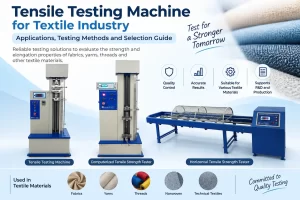
A Tensile Testing Machine is used to determine the tensile strength and elongation characteristics of materials.
For textile applications, tensile testing can be used to evaluate fabrics, yarns and other flexible materials. The test helps determine how a specimen behaves when a controlled tensile force is applied.
Tensile testing is particularly useful for quality control, research and development, material comparison and production verification.
2. Abrasion Testing Equipment
Abrasion resistance is an important performance property for many textile materials because fabrics can experience repeated rubbing and surface wear during their service life.
An Abrasion Tester is used to evaluate the resistance of textile materials to controlled abrasive action. Different abrasion test methods are available depending on the material and required procedure. ASTM textile standards include methods covering abrasion resistance, including Martindale-type testing.
Abrasion testing can be useful for fabrics used in apparel, upholstery, industrial textiles and other applications where resistance to surface wear is important.
3. Bursting Strength Tester
A Bursting Strength Tester is used to determine the resistance of textile materials to bursting pressure.
Unlike tensile testing, which generally applies force in a particular direction, bursting tests evaluate the ability of a fabric specimen to withstand pressure until it bursts.
This type of testing can be useful for knitted fabrics, woven materials and other textile products where multidirectional stress performance is important.
4. Tearing Strength Tester
Tearing strength is another important property of textile materials. A fabric may have good tensile strength but still require evaluation of its resistance to tearing.
A Tearing Strength Tester helps determine the force required to propagate a tear through a textile specimen using a specified test procedure.
Tearing tests can be useful for evaluating fabrics used in garments, industrial textiles, bags, protective products and other applications.
5. Colour Fastness Testing Equipment
Colour performance is extremely important for dyed and printed textile products. Customers expect colours to remain acceptable during use, washing, rubbing and other conditions.
Colour fastness testing equipment can be used to evaluate the resistance of textile colours to different influences.
For example, ISO 105-X12 specifies a method for evaluating colour fastness to rubbing using dry and wet rubbing conditions.
Similarly, ISO 105-C06 covers colour fastness to domestic and commercial laundering procedures.
Depending on the application, laboratories may also perform testing related to light, weathering, washing, perspiration and other factors.
6. Pilling Testing Equipment
Pilling refers to the formation of small fibre balls or pills on the surface of a textile fabric.
A Pilling Tester is used to evaluate the tendency of fabrics to develop pills and other surface changes under specified test conditions.
Pilling performance is particularly important for apparel, knitted fabrics, upholstery and other products where surface appearance affects perceived quality.
7. Fabric Weight Testing Equipment
Fabric weight is an important parameter in textile manufacturing and quality control.
Fabric testing instruments can be used to determine the mass per unit area of a textile material. This information helps manufacturers maintain consistency between production batches and verify that the fabric meets the required specifications.
ASTM’s textile standards include test methods for determining the mass per unit area of fabric.
How to Choose the Right Textile Testing Equipment?
Choosing the correct textile testing machine depends on several factors.
1. Identify the Material
First, determine what you need to test. The material could be:
- Fibre
- Yarn
- Woven fabric
- Knitted fabric
- Nonwoven fabric
- Garment
- Technical textile
- Composite or coated textile
Different materials may require different test methods and equipment.
2. Define the Required Test
Identify the property that needs to be measured. For example:
- Tensile strength
- Elongation
- Tearing strength
- Bursting strength
- Abrasion resistance
- Pilling resistance
- Colour fastness
- Fabric weight
- Dimensional stability
3. Consider the Applicable Standard
The testing method should be selected according to the applicable customer specification, product requirement or recognized standard.
ASTM and ISO publish numerous textile testing standards covering properties such as breaking strength, abrasion resistance, tearing strength, fabric mass and pilling.
4. Check Machine Specifications
Before purchasing a testing machine, consider specifications such as:
- Testing range
- Accuracy
- Test speed
- Load capacity
- Specimen dimensions
- Digital display and controls
- Data recording options
- Software requirements
- Safety features
- Calibration requirements
5. Consider Laboratory Requirements
For a testing laboratory, the equipment should be suitable for the expected workload and test environment. Ease of operation, repeatability, maintenance, technical support and availability of spare parts should also be considered.
Applications of Textile Testing Equipment
Textile testing machines are used across several industries and organizations, including:
- Textile manufacturing
- Garment manufacturing
- Footwear manufacturing
- Leather industries
- Home furnishing
- Technical textiles
- Research and development laboratories
- Quality control laboratories
- Testing and certification laboratories
- Educational institutions
- Product development departments
Testing equipment can help these organizations evaluate materials before production, during manufacturing and during final quality inspection.
Importance of Accurate and Repeatable Testing
Testing results are useful only when the testing process is properly controlled.
Laboratories should follow the appropriate test method, specimen preparation procedure and operating conditions. Equipment should also be maintained and calibrated according to the laboratory’s quality requirements.
Consistent testing procedures help laboratories obtain more reliable and comparable results and support better quality-control decisions.
Why Choose Globe Tex Industries for Textile Testing Equipment?
Globe Tex Industries provides testing solutions for textile, fabric, footwear, leather and material testing applications.
The company’s product range includes Tensile Testing Machines, Fabric Testing Equipment, Footwear Testing Equipment, Yarn Testing Equipment, Colour Testing Equipment, Safety Helmet Testing Equipment and other laboratory testing instruments.
Globe Tex Industries focuses on precision engineering, reliable performance and technical support for laboratories, manufacturers, research organizations and quality-control departments.
Whether you need equipment for fabric strength testing, abrasion testing, colour testing or other laboratory applications, selecting the appropriate testing machine is an important step toward achieving consistent and reliable quality evaluation.
Conclusion
Textile testing equipment is an essential part of modern textile quality control. From tensile strength and abrasion resistance to colour fastness, tearing strength and pilling, different tests help manufacturers understand how their materials will perform under specified conditions.
The right equipment should be selected according to the material, required test, applicable standard and laboratory requirements. With properly selected and maintained testing instruments, manufacturers and laboratories can improve quality control, support product development and make better material-performance decisions.
If you are looking for reliable textile testing equipment or fabric testing machines, Globe Tex Industries can provide testing solutions according to your application and laboratory requirements.
Contact Globe Tex Industries to discuss your textile testing equipment requirements and get technical assistance for selecting the right testing solution.