ELECTRICAL RESISTANCE TESTER- SAFETY FOOTWEAR
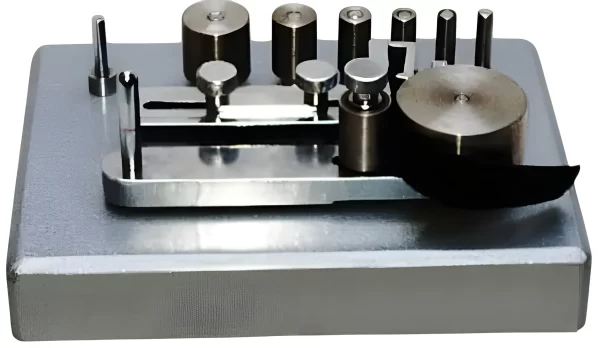
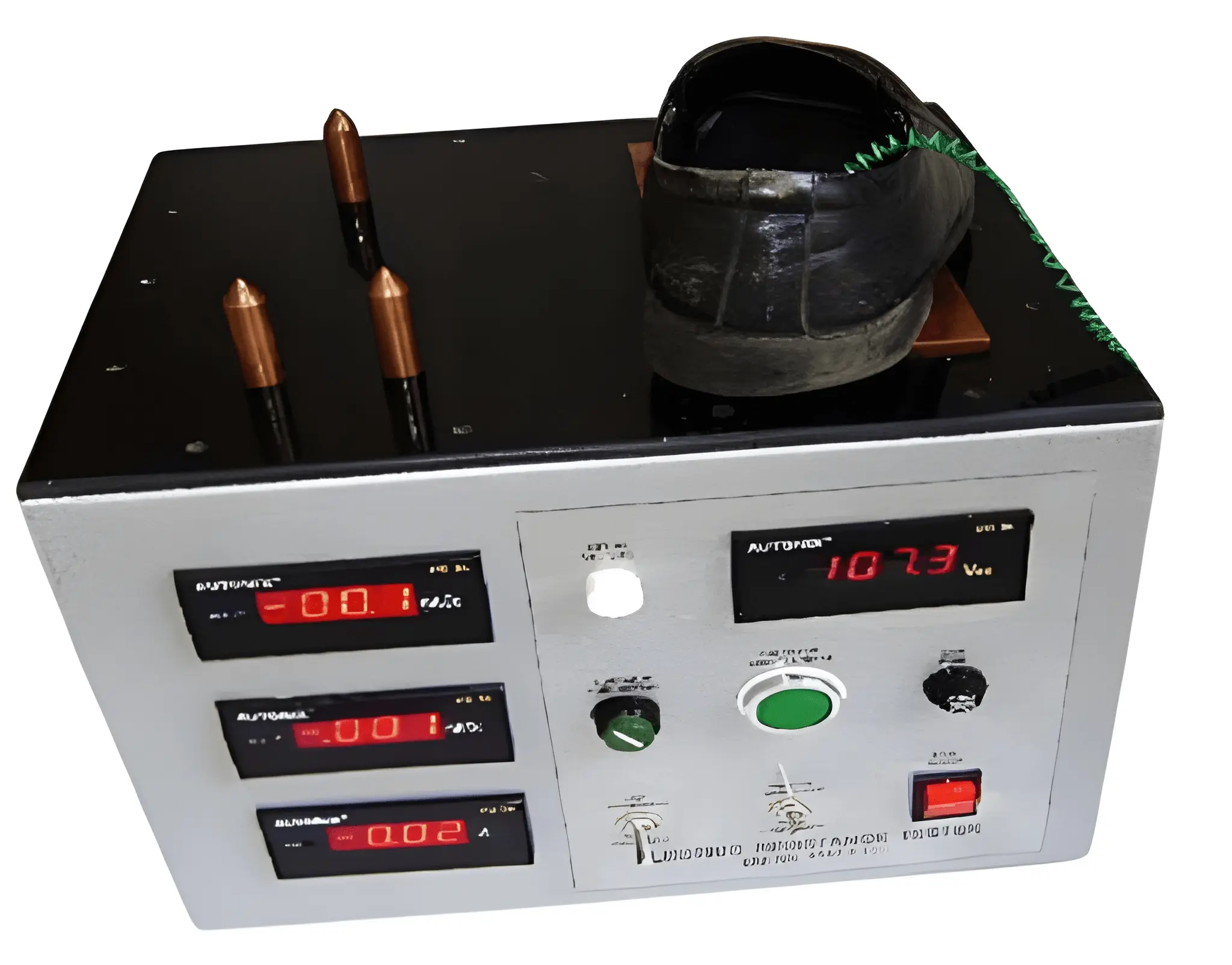
The Electrical Resistance Tester for footwear consists of an arrangement to measure the resistance between two electrodes across the footwear with a specified voltage applied across them. The internal electrode comprises of steel balls placed in the footwear and the external electrode comprises of a copper plate on which the footwear is placed.
The specified voltage is supplied through a built-in power supply and measured on a digital voltmeter. The resistance is measured on a million-mega-ohm meter and a kilo-ohm meter. The results will be displayed in YES or NO or PASS or FAIL with the additional modification in the system.
 Chat on WhatsApp
Description
| Specification | Details |
|---|---|
| Model No. | GTX-LU5-A |
| Test Voltage | 100 ± 2 Volts DC |
| Internal Electrodes | 5 mm Diameter Steel Balls (Total Mass 4 kg) |
| External Electrode | 100 mm × 230 mm × 6 mm Thick Copper Plate |
| Voltmeter | 199.9 Volts DC (Digital) |
| Kilo-ohm Meter | 0.1 KΩ to 100 KΩ (Single Range, Analogue) |
Features:
- Designed for measuring electrical resistance of safety footwear.
- Digital voltmeter for accurate voltage measurement.
- Wide resistance measurement range from 0.1 KΩ to 100 KΩ.
- Steel ball electrode arrangement as per standard requirements.
- Heavy-duty copper plate external electrode.
- Reliable and repeatable test results.
Related Standards:
- BS EN 344:1992 – Requirements and Test Methods for Safety, Protective and Occupational Footwear for Professional Use.
- Clause 4.3.4 and 5.7 – Electrical Resistance.
- IS 15298 (Part-1):2011 – Personal Protective Equipment, Test Methods for Footwear.
- Clause 5.10 – Determination of Electrical Resistance.