
DIN ABRASION TESTER
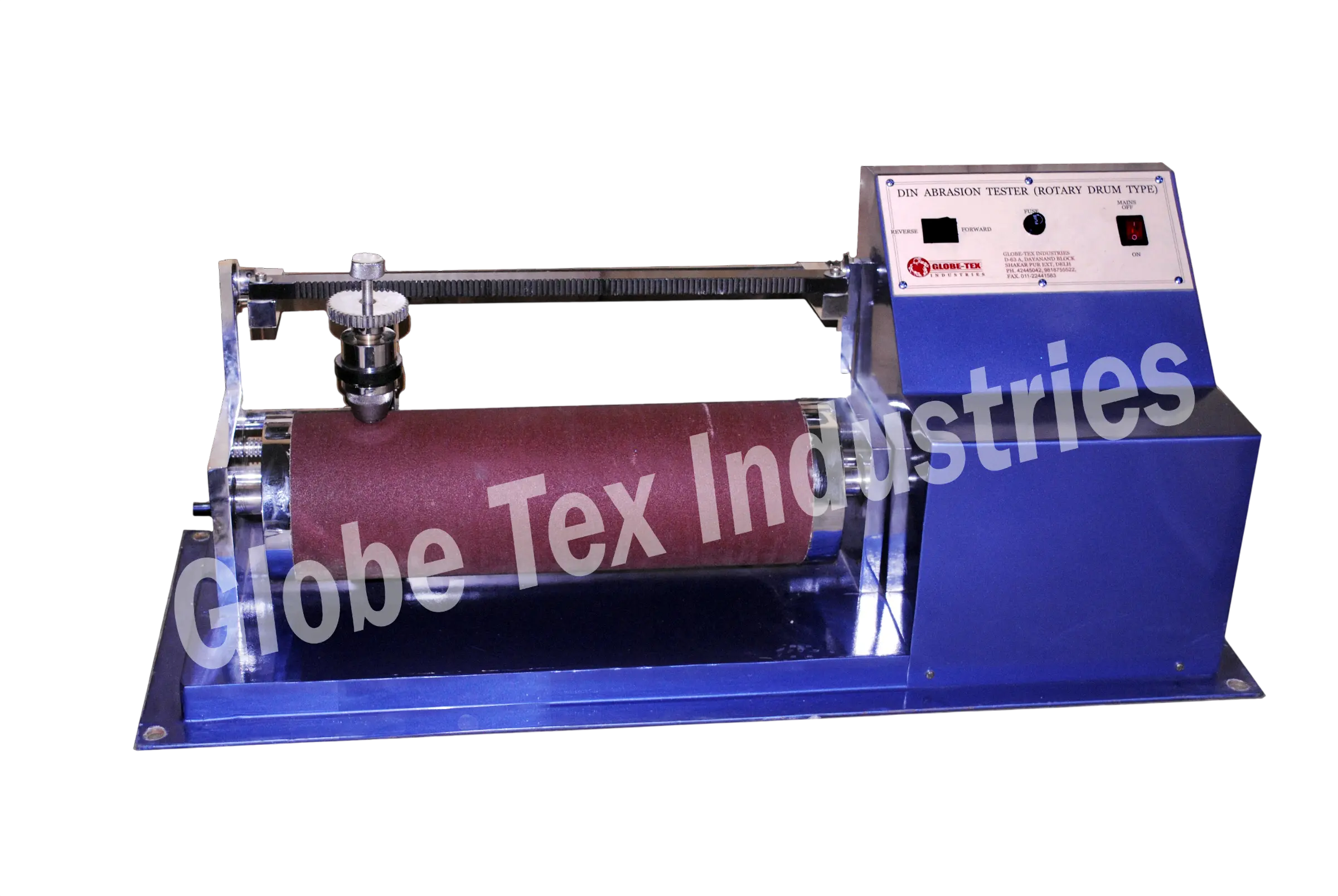
DIN Abrasion Tester is a precision testing instrument used to determine the abrasion resistance of rubber, elastomers, footwear soles, and related materials. The machine evaluates material durability by measuring volume loss when a test specimen is subjected to controlled abrasion against a standard abrasive surface mounted on a rotating drum.
During the test, the specimen is held under a specified load while the drum rotates at a constant speed. The controlled movement of the specimen across the abrasive surface ensures accurate and repeatable test results. The abrasion resistance index is calculated by comparing the volume loss of the test sample with that of a standard reference rubber under identical testing conditions.
The DIN Abrasion Tester is widely used in footwear industries, rubber manufacturing units, quality control laboratories, and research institutions for evaluating wear resistance and product durability. Built on a robust metallic base frame with a corrosion-resistant finish, the machine offers reliable performance, long service life, and compliance with international testing standards including DIN 53516 and ISO 4649.
 Chat on WhatsApp
Description
DIN Abrasion Tester
DIN Abrasion Tester is a precision testing instrument designed to determine the abrasion resistance of rubber, elastomers, soles, safety footwear materials, and other polymer-based products. The equipment is widely used in footwear industries, rubber manufacturing units, quality control laboratories, research institutions, and testing centers to evaluate material durability under controlled abrasive conditions.
The DIN Abrasion Tester measures the volume loss of a test specimen when subjected to abrasion against a standard abrasive surface. The test helps manufacturers assess the wear resistance properties of materials and ensure compliance with national and international quality standards. The machine provides accurate, repeatable, and reliable test results, making it an essential instrument for product development and quality assurance.
Working Principle of DIN Abrasion Tester
The DIN Abrasion Tester operates using a rotating cylindrical drum covered with abrasive cloth. During testing, the specimen is pressed against the rotating drum under a specified load. As the drum rotates, controlled abrasion occurs on the test specimen, resulting in material loss. The abrasion resistance is determined by measuring the volume loss of the specimen after completion of the test cycle.
The machine is designed with a precision specimen holder, rotating drum mechanism, and adjustable loading system to ensure consistent testing conditions. The controlled speed and abrasion path enable users to obtain reliable and repeatable test results in accordance with international testing standards.
Applications of DIN Abrasion Tester
- Footwear manufacturing industries
- Safety shoe and industrial footwear testing
- Rubber and elastomer manufacturers
- Quality control laboratories
- Research and development centers
- Testing and certification agencies
- Educational and technical institutions
Benefits of DIN Abrasion Tester
- Accurate measurement of abrasion resistance.
- Reliable and repeatable testing results.
- Suitable for rubber, elastomers, and footwear materials.
- User-friendly operation and maintenance.
- Strong and durable machine construction.
- Compliance with international testing standards.
- Ideal for quality assurance and product development applications.
Industries Using DIN Abrasion Tester
The DIN Abrasion Tester is widely used by footwear manufacturers, rubber product manufacturers, tire industries, testing laboratories, safety equipment manufacturers, and research organizations.
The equipment helps evaluate the wear resistance characteristics of materials before commercial production and market release.
For complete footwear and material testing solutions, users can also explore our
Bata Belt Flex Tester
and
Crackiness Tester.
These testing instruments are commonly used for evaluating flexibility, crack resistance, and durability characteristics of footwear and rubber materials.
Why Choose Globe Tex Industries for DIN Abrasion Tester?
Globe Tex Industries manufactures high-quality DIN Abrasion Testers designed to meet the requirements of modern testing laboratories and manufacturing facilities. Our testing equipment is developed with a focus on accuracy, durability, ease of operation, and compliance with international standards. With extensive industry experience, we provide dependable testing solutions that help customers maintain product quality and improve performance.
The DIN Abrasion Tester offered by Globe Tex Industries is engineered for long-term reliability and precise abrasion resistance testing, making it an ideal choice for quality control and research applications.
| Specification | Details |
|---|---|
| Model No. | GTX-LP6 |
| Diameter of Test Specimen | 16 ± 0.2 mm |
| Height of Test Specimen | 6 to 10 mm |
| Diameter of Rotating Drum | 150 mm |
| Length of Rotating Drum | 470 mm |
| Speed of Rotation of Cylinder | 40 ± 2 RPM |
| Lateral Movement of Specimen Holder | 4.2 mm per Revolution of Drum |
| Load on Test Specimen | 10 N / 5 N |
| Inclination of Axis of Specimen Holder | 3° from Vertical |
| Total Length of Abrading Run | 40 m (Approx. 84 Rotations) |
| Abrasive Cloth | 450 mm Wide × 473 mm Long, Coated with 60 Grit Aluminum Oxide Abrasive Grain |
| Motor | ¼ HP, 230 Volts AC |
Features:
- Machine frame with drive system and specimen holder.
- Abrasion drum with metal housing.
- Electric motor for rotation of drum and specimen holder.
- User-friendly operation.
- Strong base plate construction.
- Rotating sample holder.
- Adjustable limit switches.
Related Standards:
- IS 15298 Clause 5.8.3.
- EN ISO 20344 Clause 8.3.
- IS 3400 (Part-3):1987 – Methods of Test for Vulcanized Rubbers.
- DIN 53516 – Determination of Abrasion Resistance of Rubber and Elastomers.
- ISO 4649:1985 – Rubber Determination of Abrasion Resistance Using a Rotating Cylindrical Drum Device.
Reference Standards
For more information about international testing and standardization requirements, visit the
ISO Official Website.